
The most common reason a beginner doesn’t catch fish at Deckers isn’t fly selection. It’s not casting accuracy. It’s not tippet size. It’s that they’re casting to water where fish aren’t.
Reading water is the single skill that separates anglers who catch fish from anglers who fish. Fly choice matters at the margins. Reading water is the whole game. After 80+ days a year on the Deckers stretch, I can tell you exactly which water types produce and which ones look fishy but don’t.
This post breaks the Deckers section into two water categories — pocket water and pool tailouts — and walks through where the fish actually hold inside each one.
What “Reading Water” Actually Means
Reading water is reading the river surface and bottom for clues about where trout can hold and feed without burning calories. Trout want four things: cover from predators, soft water that doesn’t make them burn energy holding position, dissolved oxygen, and proximity to the current that’s carrying food. On a cold tailwater like Deckers the oxygen is almost always there, so in practice the other three are what you’re reading for — but wherever all four overlap, fish hold. Wherever one is missing, fish don’t.
Most water on a river is not fish-holding water. The middle of a fast riffle is too turbulent. The shallow gravel bar is too exposed. The center of a wide pool with no current break is too lifeless. Anglers who haven’t learned to read water spend most of their casts on water that has no fish in it.
Pocket Water at Deckers
The classic Deckers pocket water lives in the section between the Deckers bridge and the Trumbull access. The river runs over Pikes Peak granite cobble and boulders here, creating a complex surface — riffles, drop-offs, pockets behind rocks, current seams along bank vegetation. It looks busy. The trick is knowing which pockets actually hold fish.
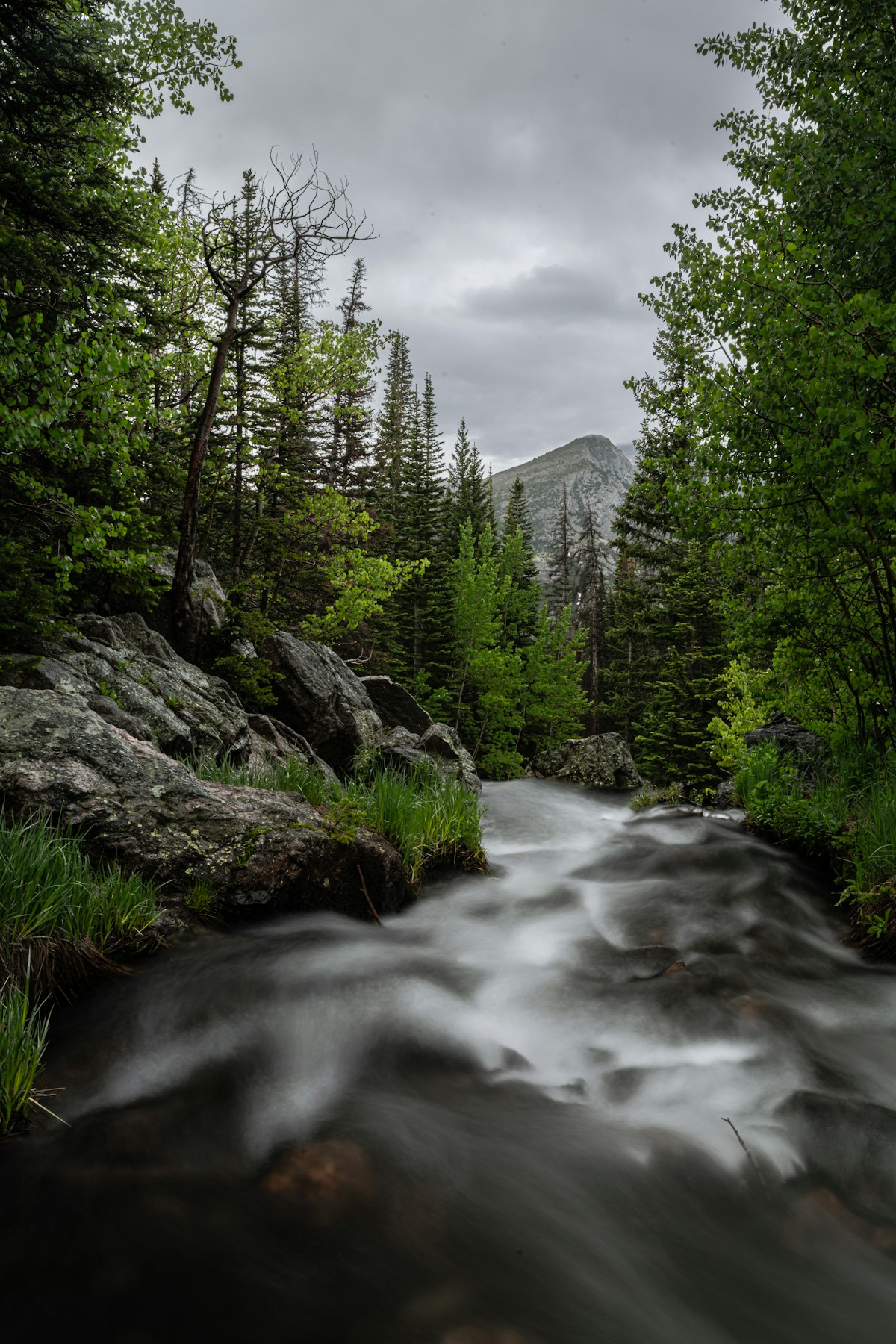
Where fish are:
- The slow water immediately behind a substantial boulder. Not the visible swirl just downstream — the calm zone right against the rock’s back side, where the current splits and re-joins. A fish sits there with its nose just outside the calm zone, picking food out of the seam.
- The cushion of soft water on the upstream side of a boulder. Smaller secondary lie — a thin cushion of softer water 6–18 inches upstream of large rocks. Less productive than the back seam but worth a drift on heavily-fished rocks where the standard lies are pressured.
- The seam between fast water and slow water. Any time you see a visible line on the surface where fast white water meets slower clear water, that line is the feeding lane. Fish hold in the slow side and dart into the fast side to take food.
- The drop-off at the back of a riffle. Where the riffle ends and the water deepens slightly into a pocket — that ledge is a holding spot. Fish stage there to grab food washing down out of the riffle.
Where fish are not:
- The center of a heavy riffle with no current break. Too turbulent. Fish can’t hold without burning calories.
- The shallow gravel bar with no rocks. Too exposed. No predator cover, nothing to break current.
- The deepest part of a wide pocket with no defined seam. Looks like good water but has no current to deliver food.
How to fish it:
Pocket water rewards short drifts and precision. The drift you get over a holding spot is 3–6 feet before drag sets in. Position close — within 15–20 feet of the pocket if possible. Use a high-stick presentation: lift the rod tip immediately after the cast lands to keep the line off the water and the fly drifting naturally through the slot. Tight-line / euro nymphing was built for this water — if you’ve considered building a euro nymphing rig, pocket water is where it pays off the most.
The point fly should be heavy — a Blowtorch in #16 or #18, orange tag in stained water, green tag in clear. Drop a Zebra Midge or RS2 18 inches above. Cover each pocket with 3–5 drifts max, then move on. The fish in each pocket are committed feeders or they’re not — they make a decision quickly.
My take
The single biggest upgrade for most anglers isn’t a better cast — it’s the discipline to walk past 80% of the river. Spend your drifts on the seams and the boulder backs and you’ll quietly out-fish someone with twice your casting skill who’s hammering dead water all afternoon.
Pool Tailouts at Deckers
The other major water type at Deckers is pool tailouts — the slower, wider sections that exist between pocket water reaches. Below the Deckers bridge there are several long flats and pools where the river slows, widens, and the bottom transitions to smaller gravel. The water looks calm and uniform. It is not. The fish are still there, but they’re holding in specific zones inside the apparent calm.
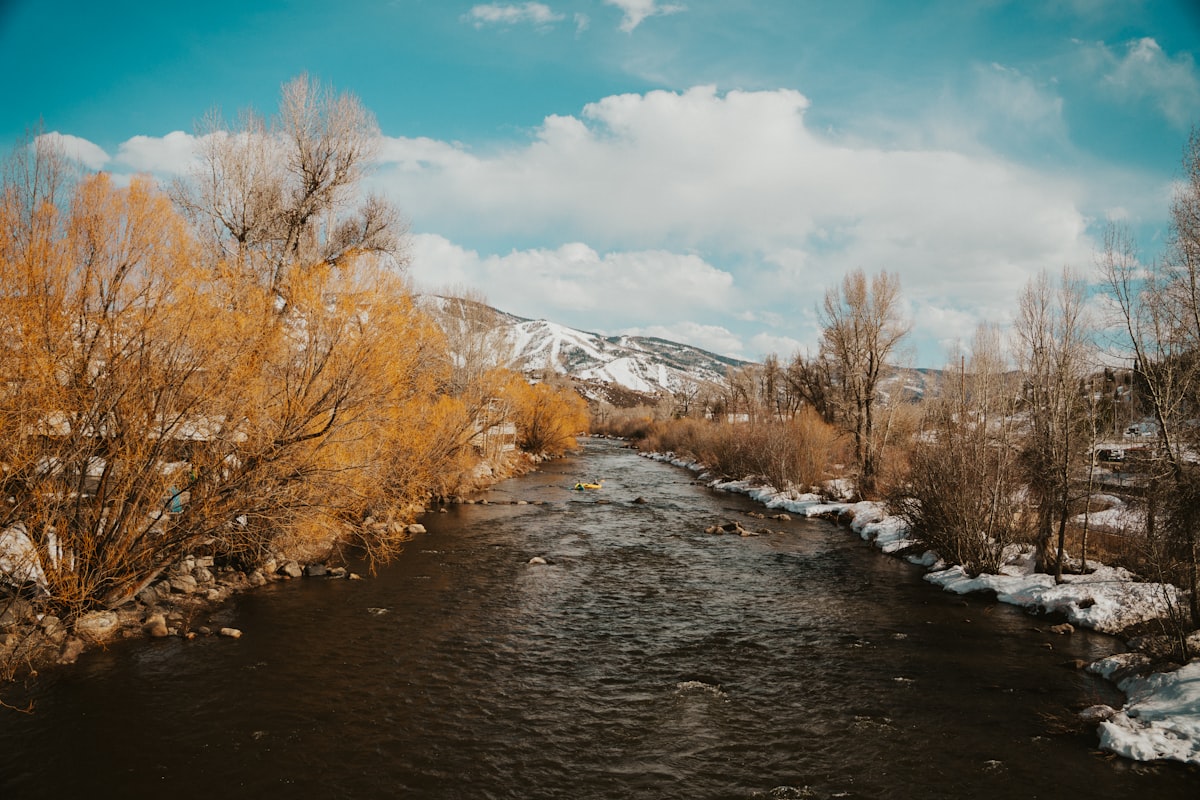
Where fish are:
- The defined seam where the pool empties into the next run. The “tailout” is the bottom 10–20 feet of a pool, just before the water accelerates and drops into the next riffle. Fish stack here to ambush food as it concentrates and accelerates into the riffle. This is the most productive single water type at Deckers.
- The shadow line under bank vegetation. Overhanging willows and undercut banks provide predator cover and shade. Fish line up under the canopy and feed on the seam where the slow main current meets the dead-water along the bank.
- The transition zone at the head of the pool. Where a riffle dumps into the pool, the deeper water immediately downstream of that drop holds fish. They face into the current and pick off everything that washes down.
- The mid-pool soft water at depth. Even in a long, calm pool, fish suspend in the middle depths if there’s any current at all. Indicator nymphing with a heavy fly tracking just off the bottom is the technique for these fish.
Where fish are not:
- The shallow tail of the tailout (last 3–5 feet before the riffle). Too exposed.
- Dead water with no current movement at all. No food delivery, no fish.
- The center of a wide pool surface with no visible feeding activity. Fish are deeper.
How to fish it:
Pool tailouts reward longer drifts and indicator nymphing. The current is more consistent than pocket water, so a single drift can produce a 20–30 foot run if the indicator is positioned correctly. Standard nymphing rig: heavy point fly + small dropper, 6X fluorocarbon tippet (drop to 7X on low or clear water), Thingamabobber indicator positioned to put the point fly 6–12 inches off the bottom. The full rigging breakdown is in the nymph rigging guide.
If a hatch is on — BWOs in spring/fall, PMDs in late May, midges year-round — pool tailouts are also where the dry-fly fishing happens. The fish move up into the surface film and rise consistently in the soft water. A Sparkle Dun BWO or Parachute Adams matched to the current hatch can produce double-digit fish in the right window.
The Boring Water in Between
The 50% of Deckers water that ISN’T productive — the wide shallow sections, the slack-water backwaters, the over-bright gravel bars — isn’t worthless, but it’s where most beginners spend most of their time. Skip it. Walk past it. Move from one productive seam to the next.
If you want to walk Deckers and only fish productive water, the rough heuristic:
- Maybe a third of the river length holds the bulk of the catchable fish
- The rest looks fishy but isn’t
- Pocket water and pool tailouts are where you spend your time
- Wide, featureless flats are where you walk through, not where you fish
Frequently asked questions
Pocket water or pool tailouts — which should I fish first? Match it to your method and the day. If you’re euro nymphing or it’s windy, start in the pocket water — short, high-stick drifts shine there. If there’s a hatch on or you’re indicator nymphing, the pool tailouts are the highest-percentage water on the entire Deckers stretch.
What’s the most productive single spot at Deckers? The defined tailout where a pool empties into the next riffle. Food concentrates and accelerates into that funnel, and fish stack up to ambush it. If I only had one drift left, that’s where I’d make it.
How close can I get before I spook the fish? Closer in broken pocket water — 15–20 feet is fine, because the surface chop hides you. Much farther on the smooth pool tailouts, where a clumsy wade or a lined fish ends it instantly. Approach low, wade slow, and false-cast off to the side, never over the fish.
How to Practice Reading Water
The best practice is also the slowest: walk a section of Deckers without fishing. Just look. Spend 10 minutes at each piece of water before you cast. Note the current breaks, the seams, the depth changes, the cover. Make yourself predict where the fish are before you put a fly in. Then fish and see if you were right.
After enough days of doing that, you stop thinking about it consciously. You walk up to a piece of water and instantly read which 20% of it is worth a cast. The fish you catch double or triple from where you started, not because your skills changed but because your casts are landing in the right place to begin with.
The flies don’t catch fish. The water does. Read the water, find the seam, drop a Blowtorch through it, and the rest mostly takes care of itself.